
What Are the Top Types of Respiratory Equipment in 2026?
In 2026, respiratory equipment is becoming more varied, connected, and patient-focused. Hospitals, clinics, emergency teams, and home caregivers rely on different tools for different breathing needs. Oxygen concentrators support patients who require supplemental oxygen. Ventilators assist people who cannot breathe adequately without mechanical support. CPAP and BiPAP devices help manage sleep-related and chronic breathing disorders. Nebulizers deliver certain prescribed medicines through a fine mist. Suction machines can help clear secretions when coughing is difficult.
Small devices matter too. Pulse oximeters provide quick oxygen saturation readings, although their results can be affected by movement, cold fingers, or poor circulation. Monitoring technology is improving, but it is not flawless. Care matters. A number on a screen never replaces clinical judgment. This overview examines the top types of respiratory equipment expected to influence care in 2026, considering function, portability, safety, maintenance, and practical value. Each category has strengths and limitations. A compact concentrator may improve mobility, yet its battery life can restrict long trips. A sophisticated ventilator may offer precise settings, but it demands trained supervision and regular servicing.
Reliable selection should follow professional assessment, manufacturer instructions, and appropriate medical guidance. Standards and device availability may also differ across regions. No single ranking is perfect. Real-world choices are often more complicated than a product list suggests. Understanding these differences can help clinicians, caregivers, and informed buyers ask better questions before choosing respiratory equipment.
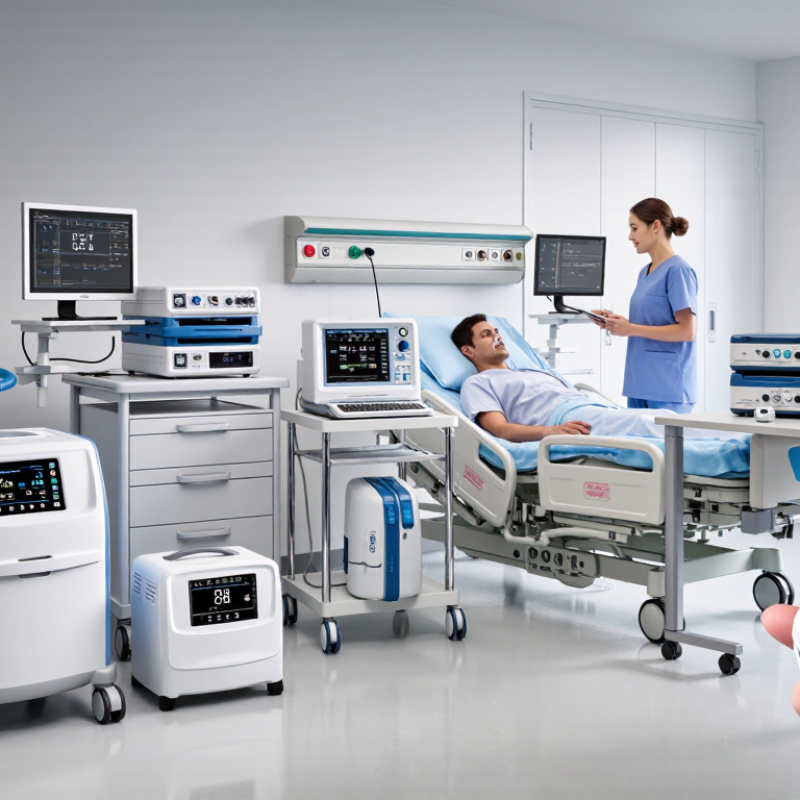
Table of Contents
[Hide]
Respiratory Equipment: Purpose, Scope, and Main Categories
Respiratory equipment supports breathing, oxygen delivery, secretion removal, and continuous monitoring. Its scope extends from home care and emergency transport to intensive care units. The right device depends on lung function, oxygen levels, mobility, diagnosis, and required supervision.
Oxygen concentrators and portable cylinders deliver supplemental oxygen when blood oxygen remains too low. Concentrators suit regular use, while cylinders can support transport or power interruptions. Ventilators provide controlled breathing assistance for patients who cannot breathe adequately alone. Noninvasive systems, including CPAP and BiPAP devices, use masks to support breathing without an airway tube. Mask fit matters. Small leaks can reduce treatment quality and irritate the skin.
Nebulizers convert liquid medicine into an inhalable mist, often helping patients who struggle with handheld inhalers. Suction machines remove airway secretions when coughing is weak. Pulse oximeters and respiratory monitors track oxygen saturation, breathing rate, and heart activity, but readings can be misleading with cold fingers or movement. In practice, staff must check settings, tubing, filters, alarms, and cleaning routines before use. A device may work perfectly and still fail through poor training. That remains an uncomfortable weakness in many care settings. Equipment selection also requires professional assessment, documented maintenance, and regular review as the patient’s condition changes.
What Are the Top Types of Respiratory Equipment in 2026? - Respiratory Equipment: Purpose, Scope, and Main Categories
| Equipment Type | Main Category | Primary Purpose | Operating Principle | Typical Range or Key Measurement | Common Care Setting | Important Limitations or Safety Considerations |
|---|---|---|---|---|---|---|
| Oxygen Concentrator | Oxygen Supply | Provides supplemental oxygen for patients with low blood oxygen levels. | Uses molecular sieve technology to remove most nitrogen from room air. | Approximately 1–10 L/min for many models; oxygen concentration is commonly around 90–95% at the rated flow. | Home care, long-term oxygen therapy, clinics, and emergency support. | Requires electrical power and regular filter maintenance; oxygen-enriched environments increase fire risk. |
| Compressed Oxygen Cylinder | Oxygen Supply | Stores oxygen for portable, backup, or emergency use. | Delivers compressed gaseous oxygen through a regulator and flow control device. | Common filling pressures are approximately 150–200 bar, depending on cylinder design and local practice. | Ambulances, hospitals, home care, transport, and disaster response. | Finite supply duration; cylinders must be secured, inspected, and kept away from ignition sources. |
| Liquid Oxygen System | Oxygen Supply | Provides a high-capacity oxygen source where portability or extended use is required. | Stores oxygen as a cryogenic liquid that vaporizes into breathable gas. | Liquid oxygen is stored near −183°C; approximately 1 liter of liquid oxygen can produce about 860 liters of gas at ambient conditions. | Specialized home care, hospitals, and high-use clinical environments. | Requires cryogenic handling, ventilation, and protection from cold-contact injuries and ignition sources. |
| Invasive Mechanical Ventilator | Ventilatory Support | Supports or replaces spontaneous breathing in patients unable to maintain adequate ventilation. | Delivers controlled or assisted breaths through an endotracheal or tracheostomy tube. | Controls may include tidal volume, respiratory rate, inspiratory pressure, oxygen concentration, and PEEP; protective tidal volumes are often based on predicted body weight. | Intensive care units, operating rooms, emergency departments, and transport. | Requires trained clinicians and continuous monitoring; risks include ventilator-associated complications and airway injury. |
| Noninvasive Ventilator | Ventilatory Support | Improves ventilation without an invasive airway. | Delivers positive airway pressure through a nasal, oronasal, or full-face mask. | Common modes include bilevel pressure support; inspiratory and expiratory pressures are adjusted according to clinical need. | Hospitals, emergency care, sleep centers, and selected home-care patients. | Mask leaks, poor tolerance, vomiting risk, and inability to protect the airway can limit use. |
| Continuous Positive Airway Pressure Device | Sleep and Airway Support | Keeps the upper airway open during sleep, primarily for obstructive sleep apnea. | Provides a continuous level of positive airway pressure through a sealed mask. | Typical therapeutic pressure settings are approximately 4–20 cmH₂O, adjusted after clinical assessment. | Home care, sleep laboratories, and outpatient respiratory services. | May cause mask leaks, nasal dryness, skin pressure, or discomfort; correct mask fitting is essential. |
| High-Flow Nasal Cannula System | Oxygen and Airway Support | Provides heated, humidified respiratory gas at high flow rates to improve oxygenation and reduce work of breathing. | Blends air and oxygen, warms and humidifies the gas, and delivers it through wide-bore nasal prongs. | Adult flow rates commonly range from approximately 1–60 L/min; oxygen concentration can be adjusted from room air to near 100%. | Emergency departments, general wards, intensive care, and neonatal care with appropriately sized systems. | Requires adequate humidification and monitoring; it does not replace invasive airway management when respiratory failure worsens. |
| Nebulizer | Medication Delivery | Converts liquid medication into an aerosol for inhalation into the airways. | Uses compressed gas, ultrasonic vibration, or a vibrating mesh to generate inhalable droplets. | Many inhalation systems target aerosol particle sizes of approximately 1–5 micrometers. | Home care, clinics, emergency departments, and hospitals. | Requires cleaning to reduce contamination; treatment time and delivered dose vary by device and medication. |
| Airway Suction Machine | Airway Clearance | Removes mucus, secretions, blood, or other material from the upper or artificial airway. | Generates negative pressure through a collection canister and suction catheter or tubing. | Many devices provide adjustable vacuum levels up to approximately −200 mmHg; the prescribed level depends on age and clinical condition. | Hospitals, ambulances, dental settings, long-term care, and home care. | Excessive suction may cause mucosal trauma, hypoxia, or bradycardia; sterile or clean technique is required as appropriate. |
| Pulse Oximeter | Monitoring | Estimates peripheral oxygen saturation and measures pulse rate noninvasively. | Uses different wavelengths of light to estimate hemoglobin oxygen saturation through a sensor placed on a finger, toe, or other site. | Displays oxygen saturation, commonly across a 70–100% measurement range, plus pulse rate. | Home monitoring, clinics, hospitals, emergency response, and remote care. | Readings may be affected by motion, poor circulation, low temperature, nail products, sensor position, and skin-related measurement bias. |
| Spirometer | Pulmonary Diagnostics | Measures airflow and lung volumes to assess respiratory function. | Records forced breathing maneuvers and calculates values such as forced vital capacity and forced expiratory volume. | Key outputs include FVC, FEV₁, FEV₁/FVC ratio, peak expiratory flow, and flow-volume curves. | Pulmonary laboratories, primary-care clinics, occupational health, and hospitals. | Results depend on patient effort, technique, calibration, and acceptable test quality. |
| Peak Flow Meter | Pulmonary Diagnostics | Measures the maximum speed of forced expiration, supporting asthma self-management. | Uses a mechanical or electronic flow measurement mechanism during a forceful exhalation. | Reports peak expiratory flow, usually in liters per minute; personal best values are used for comparison. | Home care, schools, outpatient clinics, and asthma management programs. | Technique and effort strongly influence results; it does not replace full spirometry. |
| Manual Resuscitator | Emergency Resuscitation | Provides temporary positive-pressure ventilation during respiratory arrest or severe breathing difficulty. | A hand-operated self-inflating bag delivers breaths through a face mask or airway device. | Adult, pediatric, and infant versions use different bag volumes and mask sizes; oxygen can be connected when available. | Emergency departments, ambulances, operating rooms, intensive care, and first-response settings. | Requires trained operation and a proper mask seal; excessive ventilation pressure can cause lung injury or gastric inflation. |
Overall scope: Respiratory equipment in 2026 can be grouped into oxygen supply, ventilatory support, airway clearance, medication delivery, physiological monitoring, pulmonary diagnostics, and emergency resuscitation. Selection should be based on the patient’s respiratory problem, required level of support, care environment, monitoring capacity, and professional clinical guidance.
Related Posts
-
10 Best Respiratory Supplies for Global Buyers
-

Why Choose the Best Medical and Surgical Supplies for Your Needs?
-
Top Oxygen Equipment Innovations for Enhanced Breathing Experience?
-
2026 How to Choose the Best Paramedic Supplies for Emergency Situations?
-
How to Choose the Best Medical Supplies Equipment for Your Needs?
-
How to Choose the Best Surgical Equipment for Your Needs?