Call us on 01707 385 226

Top Types of Medical Devices for Global Buyers

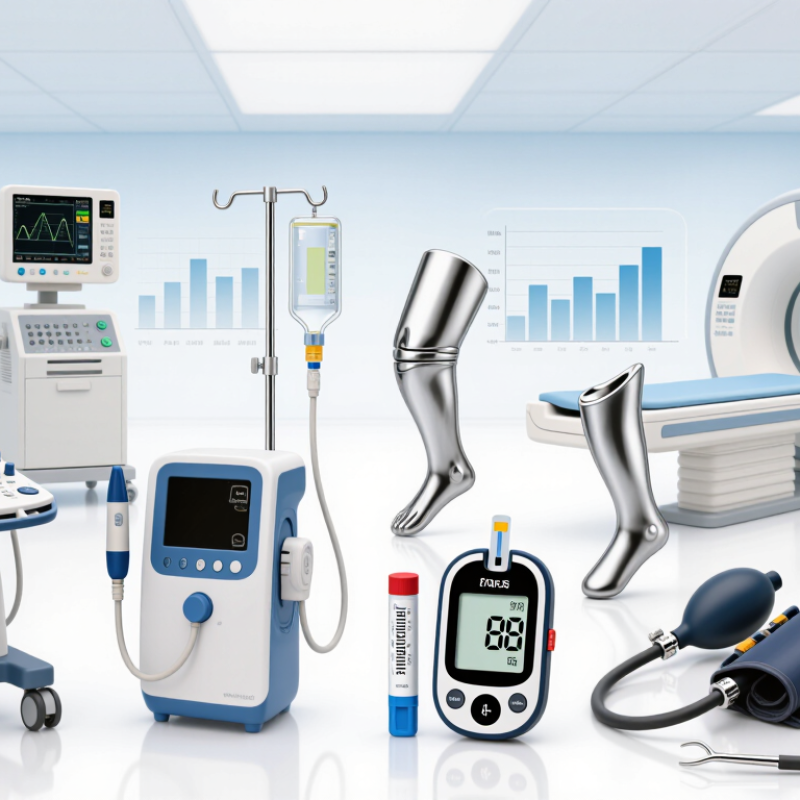
Global buyers are entering a medical devices market shaped by clinical need, aging populations, and faster innovation. The World Health Organization’s Global Atlas of Medical Devices reports more than two million device types worldwide, grouped into over 7,000 categories. That scale makes purchasing decisions difficult. A portable ultrasound system, infusion pump, or home glucose monitor may appear simple. Yet each requires evidence, training, maintenance, and dependable supply.

WHO Director-General Dr. Tedros Adhanom Ghebreyesus has stated, “Medical devices are essential for the prevention, diagnosis, treatment and rehabilitation of illness and disease.” His words explain why product selection cannot depend on price alone. The WHO also identifies diagnostics, imaging equipment, monitoring systems, surgical tools, implants, and assistive technologies as vital device areas. MedTech Europe’s Facts and Figures 2024 report valued Europe’s medical technology market at approximately €170 billion in 2023. It also showed a broad and diverse supplier base.

This guide examines the top types of medical devices for global buyers. It focuses on practical use. It considers product maturity, service access, interoperability, and total ownership cost. Regulatory expectations also matter, even when this overview remains general. A device approved in one market may need additional evaluation elsewhere.

The picture is not perfect.

Some market forecasts differ. Definitions also vary between reports. Buyers should verify current data, local requirements, and clinical evidence before signing contracts. A low purchase price can hide costly calibration, spare-part delays, or staff retraining. The strongest choice is rarely the newest device. It is the device that performs reliably when patients and clinicians need it most.
Top Types of Medical Devices for Global Buyers

Medical Device Classification by Risk, Purpose, and Regulatory Status

Top Types of Medical Devices for Global Buyers

Medical Device Classification by Risk, Purpose, and Regulatory Status

Medical devices are often grouped by risk, intended purpose, and regulatory status. Risk classification differs across jurisdictions, so one label cannot guide every purchase. Lower-risk devices may include examination gloves, manual wheelchairs, or simple bandages. Higher-risk products can include implantable devices, life-support equipment, and active surgical systems. The level usually reflects invasiveness, contact duration, energy output, and the consequences of failure.

Purpose adds another useful layer. Diagnostic devices identify disease or measure body functions. Monitoring devices track temperature, oxygen levels, or heart rhythm. Therapeutic devices deliver treatment, while assistive products support mobility, hearing, or daily care. In vitro diagnostic devices test samples outside the body and may follow separate rules. Buyers should compare the intended use statement with the actual clinical application. Small wording differences matter.

Regulatory status requires careful document review. A device may be approved, cleared, registered, listed, or authorized, depending on the market. These terms are not interchangeable. Check the manufacturer’s quality documentation, conformity assessment, technical file, labeling, and post-market surveillance records. ISO 13485 certification supports quality management, but it does not automatically prove market access. That is an easy mistake.

In procurement reviews, I would also verify UDI details, electrical safety reports, shelf life, language requirements, and import responsibilities. A product can meet technical standards yet remain unsuitable for a specific hospital. The classification may even change after a new intended use is declared. Risk is not static. Buyers should question incomplete certificates and request evidence from official regulatory sources. Some documentation still looks convincing but lacks traceability.

Diagnostic Devices for Screening, Testing, and Disease Detection

Top Types of Medical Devices for Global Buyers

Diagnostic Devices for Screening, Testing, and Disease Detection

Diagnostic devices help healthcare teams identify health risks before symptoms become severe. Common categories include blood analyzers, molecular testing systems, imaging equipment, ultrasound units, and rapid screening tools. Each device serves a different clinical question. Buyers should match the device with local disease patterns, testing volume, and available staff.

A blood analyzer may process dozens of samples each hour, but accuracy depends on calibration, reagents, and sample handling. Molecular systems can detect specific genetic material, although they often require controlled workflows and trained operators. Imaging devices provide valuable visual evidence. However, image quality can fall when installation, electrical supply, or maintenance is overlooked.

Reliable purchasing involves more than comparing specifications. Buyers should review clinical evidence, quality management records, cybersecurity controls, and applicable regulatory approvals. Independent performance evaluations can reveal limitations that marketing materials miss. Ask about warranty response times, spare parts, software updates, and user training. Check whether instructions are available in the working language.

Small clinics may prefer compact devices with simple interfaces. Large laboratories may need automation and connection with information systems. Not every advanced device fits every setting. That is easy to forget. A technically impressive system can remain unused if consumables are costly or support is distant. Trial testing with local samples, when permitted, can expose workflow problems before a major purchase. Calibration logs and maintenance records should remain accessible throughout the device’s service life.

Top Types of Medical Devices for Global Buyers - Diagnostic Devices for Screening, Testing, and Disease Detection
Diagnostic Device Category Device Type Primary Screening or Diagnostic Use Typical Specimen or Measurement Core Detection Principle Typical Result Format Common Care Setting Key Procurement Considerations
In Vitro Diagnostics Rapid Antigen Test Qualitative screening for selected infectious diseases Nasal, nasopharyngeal, throat, or other validated swab specimens Immunochromatographic detection of pathogen-specific antigens PositiveNegativeInvalid Community screening sites, clinics, pharmacies, and point-of-care locations Check intended use, specimen requirements, analytical sensitivity, storage temperature, shelf life, controls, and local registration requirements
In Vitro Diagnostics Molecular Amplification Analyzer Detection of pathogen DNA or RNA and selected genetic targets Swab, saliva, blood, urine, or other validated clinical specimens Nucleic-acid amplification, such as real-time PCR or isothermal amplification Detected, not detected, or qualitative/semi-quantitative target result Clinical laboratories, hospitals, and decentralized testing sites Evaluate contamination control, throughput, extraction needs, internal controls, reagent availability, connectivity, and operator training
In Vitro Diagnostics Clinical Chemistry Analyzer Measurement of biochemical markers for metabolic, renal, hepatic, and other conditions Serum, plasma, urine, or whole blood depending on the assay Photometric, turbidimetric, ion-selective electrode, or enzymatic measurement Numeric concentration, activity, or calculated value with reference range Central laboratories, hospital laboratories, and outpatient laboratories Assess test menu, throughput, calibration requirements, reagent stability, maintenance, water quality, and quality-control support
In Vitro Diagnostics Hematology Analyzer Screening and evaluation of anemia, infection, inflammation, and blood-cell abnormalities Usually venous or capillary whole blood Electrical impedance, optical light scatter, and photometric hemoglobin measurement Complete blood count parameters and cell-distribution results Hospitals, laboratories, clinics, and public-health programs Review sample volume, throughput, differential capability, reagent logistics, calibration, carryover control, and biosafety requirements
In Vitro Diagnostics Blood Glucose Meter Screening and monitoring of blood glucose abnormalities Capillary whole blood from a fingerstick or other validated site Electrochemical or photometric measurement using a disposable test strip Numeric glucose concentration, commonly in mg/dL or mmol/L Homes, primary-care clinics, hospitals, and diabetes programs Verify measurement range, strip availability, coding requirements, hematocrit limitations, infection-control procedures, and unit settings
In Vitro Diagnostics Immunoassay Analyzer Measurement of hormones, cardiac markers, infectious-disease markers, and other analytes Serum, plasma, whole blood, urine, or other validated specimens Antigen-antibody binding detected by chemiluminescence, fluorescence, or other signal systems Qualitative, semi-quantitative, or quantitative result Central laboratories, hospitals, and specialty testing facilities Compare assay menu, analytical measuring range, calibration intervals, reagent storage, lot traceability, turnaround time, and interference data
Physiological Monitoring Non-Invasive Blood Pressure Monitor Screening and monitoring of elevated or low blood pressure Oscillometric pressure measurement at the upper arm or wrist, depending on design Detection of cuff-pressure oscillations during inflation or deflation Systolic pressure, diastolic pressure, and pulse rate Primary care, hospitals, occupational health, and home monitoring Confirm cuff-size range, validation evidence, measurement accuracy, power options, memory capacity, and suitability for the target population
Physiological Monitoring Pulse Oximeter Assessment of peripheral oxygen saturation and pulse rate Optical measurement through a finger, toe, or other approved site Ratio of red and infrared light absorption by oxygenated and deoxygenated hemoglobin SpO₂ percentage and pulse rate Emergency care, hospitals, clinics, ambulances, and home care Consider accuracy claims, motion and low-perfusion performance, probe options, display readability, alarm functions, and cleaning requirements
Cardiac Diagnostics Electrocardiograph Recording and evaluation of cardiac electrical activity Electrical signals captured through skin electrodes Surface electrocardiography using leads positioned on the limbs and chest Waveform tracing with heart rate and optional automated measurements Hospitals, clinics, emergency departments, ambulances, and screening programs Review lead configuration, signal quality, paper or digital output, data export, battery operation, electrode compatibility, and interpretation limitations
Medical Imaging Ultrasound Imaging System Imaging of soft tissues, pregnancy, abdominal organs, vessels, and selected musculoskeletal structures Acoustic echoes generated within the body High-frequency sound transmission and echo processing Real-time two-dimensional images, with optional Doppler or three-dimensional data Hospitals, imaging centers, obstetric clinics, emergency care, and mobile services Assess transducer types, imaging modes, portability, image storage, infection control, service support, and operator training
Medical Imaging Digital X-Ray System Detection and assessment of bone, chest, and selected soft-tissue abnormalities Transmission of ionizing X-rays through the body Differential X-ray attenuation captured by a digital detector Digital radiographic image with exposure and patient information Hospitals, radiology departments, clinics, trauma centers, and mobile units Check radiation protection, detector type, image quality, dose management, room requirements, workflow integration, and regulatory approvals
Medical Imaging Computed Tomography System Cross-sectional imaging for trauma, stroke assessment, thoracic disease, and other conditions Multiple X-ray projections reconstructed into cross-sectional images Computerized reconstruction of X-ray attenuation data Cross-sectional, multiplanar, or three-dimensional image data Hospitals, emergency departments, and advanced imaging centers Evaluate radiation dose, detector configuration, reconstruction software, room shielding, cooling, service requirements, and contrast-media workflow
Endoscopic Diagnostics Flexible Video Endoscope Visual examination of internal passages and organs, including the gastrointestinal or respiratory tract Optical images captured from an inserted flexible instrument Miniature camera or image sensor with illumination and video processing Real-time endoscopic images and stored still or video files Hospitals, endoscopy units, operating rooms, and specialty clinics Confirm image quality, working-channel size, sterilization or high-level disinfection method, repair support, accessories, and data management
Ophthalmic Diagnostics Autorefractor and Keratometer Objective assessment of refractive error and corneal curvature Optical reflection from the eye and corneal surface Automated analysis of reflected light patterns Sphere, cylinder, axis, and keratometry measurements Optometry practices, ophthalmology clinics, and vision-screening centers Consider measurement range, fixation support, patient alignment, printer or connectivity options, calibration, and operator workflow
Point-of-Care Diagnostics Urine Analyzer Screening for urinary, renal, metabolic, and selected systemic abnormalities Urine collected in a sterile or clean container Reflectance photometry of reagent-strip chemical reactions Qualitative or semi-quantitative values for parameters such as blood, protein, glucose, and leukocytes Clinics, hospitals, laboratories, occupational health, and primary care Review strip compatibility, parameter menu, sample handling, cleaning, result storage, quality controls, and strip shelf life
Respiratory Diagnostics Spirometer Assessment and monitoring of airflow limitation and pulmonary function Forced respiratory maneuvers through a mouthpiece Measurement of airflow and exhaled volume over time Parameters such as FEV₁, FVC, FEV₁/FVC ratio, and flow-volume curves Pulmonary clinics, primary care, occupational health, and hospitals Check test standards, calibration procedures, disposable components, software reference values, infection control, and patient coaching requirements
Procurement data should be verified against the applicable destination-country regulations, intended-use labeling, clinical validation evidence, electrical-safety requirements, cybersecurity controls, servicing capabilities, and post-market surveillance obligations.

Monitoring Devices for Tracking Patient Health and Vital Signs

Top Types of Medical Devices for Global Buyers

Monitoring devices help healthcare teams track patient health through measurable, timely data. Common examples include multiparameter monitors, pulse oximeters, blood pressure monitors, thermometers, glucose meters, and wearable heart-rate sensors. These tools may measure oxygen saturation, pulse, temperature, respiration, or blood pressure at the bedside or during daily care.

Accuracy matters most.

Global buyers should examine measurement ranges, sensor compatibility, battery life, screen readability, and data export options. A monitor used in a crowded emergency room needs clear alarms and quick cleaning. A home-care device may require simple controls, large numbers, and reliable wireless transmission. Buyers should review calibration records, clinical validation, electrical safety documentation, and applicable market approvals before purchasing. Local language support and training materials can prevent avoidable errors.

Alarm settings need careful attention. Excessive alerts can cause fatigue, while weak settings may delay clinical action. Staff should compare readings with approved reference methods during evaluation. Results can shift because of movement, cold fingers, poor sensor placement, or irregular circulation. No device is perfect. I have seen teams trust a displayed number without checking the patient’s condition, which is a serious reminder. Monitoring supports clinical judgment; it does not replace examination, professional training, or documented care procedures. Data security also deserves review when devices store or transmit patient information across networks.

Therapeutic Devices for Treatment, Rehabilitation, and Patient Support

Top Types of Medical Devices for Global Buyers

Therapeutic devices support treatment, rehabilitation, and daily patient care. Common categories include infusion systems, respiratory support equipment, dialysis devices, electrotherapy units, and pressure-relief mattresses. Rehabilitation products include wheelchairs, mobility aids, orthoses, and patient transfer equipment. The World Health Organization and UNICEF reported in Global Report on Assistive Technology (2022) that more than 2.5 billion people need at least one assistive product. That figure may reach 3.5 billion by 2050.

Numbers need careful interpretation. A device suitable for a large hospital may fail in a rural clinic with unstable electricity. Buyers should examine battery performance, cleaning requirements, spare-part access, and staff training. WHO estimates that 2.4 billion people could benefit from rehabilitation services, according to its Rehabilitation fact sheet. This demand includes stroke recovery, injury care, chronic pain management, and ageing-related support. A low-cost device is not always economical. Frequent repairs can interrupt treatment and increase total ownership costs.

Tips: Start with the patient’s routine. Test controls with gloved hands. Check alarm visibility from two metres. Request evidence for safety, durability, and clinical performance. Review ISO 13485 quality systems and applicable national registration requirements. Procurement teams should also ask whether local technicians can service the device. This step is often missed. It should not be.

Top Types of Medical Devices for Global Buyers

Therapeutic Devices for Treatment, Rehabilitation, and Patient Support

The chart links major therapeutic and patient-support device categories with the estimated global population affected by the related health condition. These figures indicate potential clinical need rather than device sales or market share.

Sources: World Health Organization, “Musculoskeletal health” (2022); WHO, “World report on hearing” (2021); WHO, “World report on vision” (2019); International Diabetes Federation, Diabetes Atlas, 10th edition (2021); World Stroke Organization, Global Stroke Fact Sheet (2022).

Surgical, Laboratory, and Home Care Devices for Global Markets

Surgical devices for global buyers must support safe, repeatable procedures in different clinical settings. Common categories include operating tables, surgical lights, infusion equipment, electrosurgical units, and reusable instruments.

Fit matters. Buyers should assess material quality, cleaning methods, replacement parts, and staff training before placing large orders. Clear technical files, performance data, and applicable regulatory documentation help hospitals evaluate products with confidence. A low purchase price can become expensive when calibration, repairs, or consumables are difficult to manage.

Laboratory devices
require equal attention to accuracy and workflow. Diagnostic analyzers, centrifuges, microscopes, and sample storage equipment should match local testing volumes and power conditions. Small details matter. Buyers need to check temperature stability, maintenance schedules, software language, and access to trained service personnel.

Home care devices serve a different environment, often with limited supervision. Blood pressure monitors, oxygen-support equipment, mobility aids, and wound-care products should be simple to operate and easy to clean. Instructions must use clear language and practical images.

One lesson stays: global distribution is not only about shipping products. It also involves user education, spare parts, safe installation, and responsible after-sales support. Even experienced buyers can overlook regional humidity or unreliable electricity. That oversight deserves a second review.

We use cookies to ensure that we give you the best experience on our website.